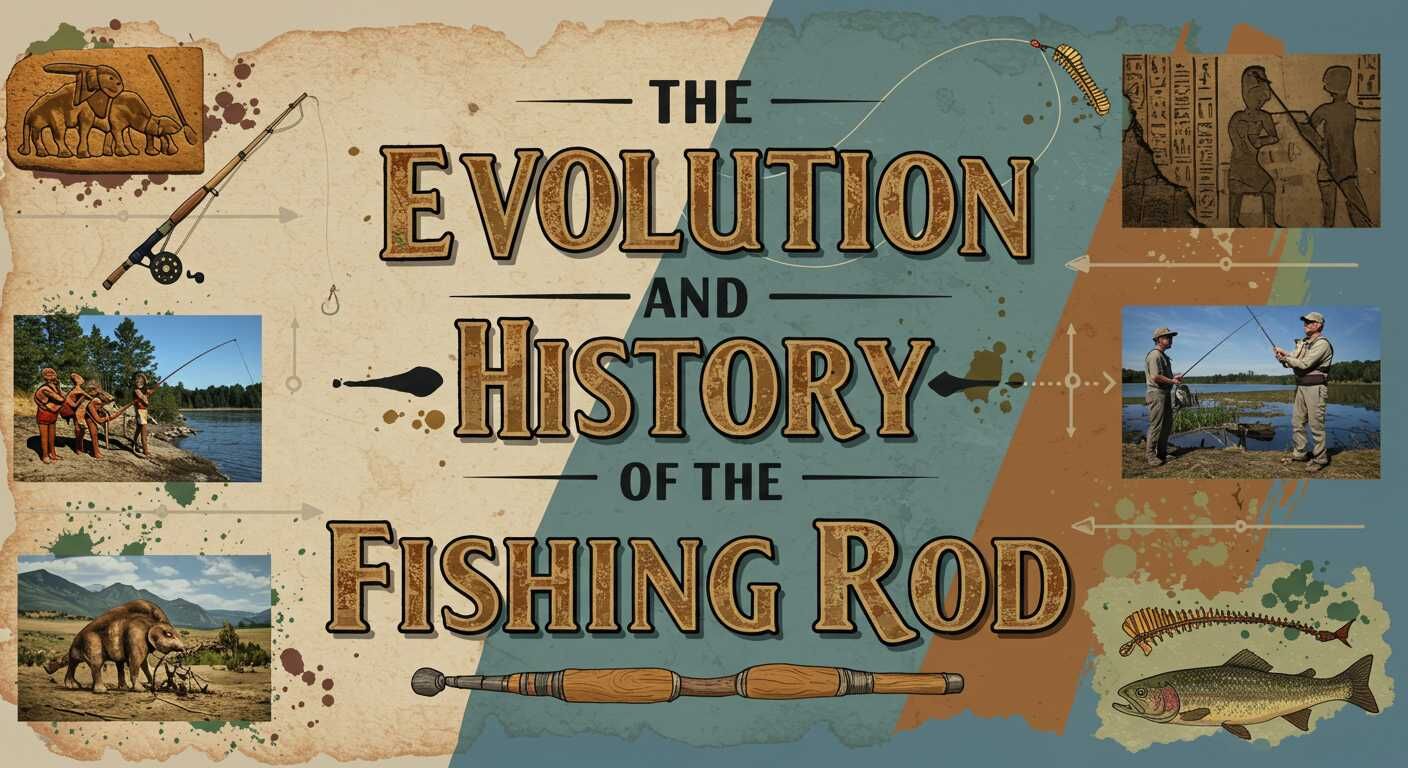

Ever stared at your fishing rod wondering how the hell we got from a stick with a string tied to it to the carbon fiber marvel in your hands? Yeah, me too. Last summer, while I was hauling in a particularly stubborn bass using my ultralight graphite rod, I couldn’t help but marvel at how far we’ve come.
One minute you’re a prehistoric human jabbing at fish with a spear, the next you’re debating the merits of medium-fast action versus fast action at your local tackle shop. The fishing rod’s evolution is nothing short of fascinating—a perfect blend of necessity, ingenuity, and the eternal human desire to catch bigger fish with less effort.
From Sticks to Sophistication: The Ancient Origins
Let’s rewind about 40,000 years—yes, that’s right, fishing isthatold. Archaeological evidence suggests humans were already figuring out ways to snag dinner from lakes and rivers way back then. But the first dedicated fishing rods? Those appeared roughly 4,000 years ago, when some brilliant ancient angler realized a long stick offered better reach than an arm.
The earliest fishing rods were delightfully simple—basically just a flexible stick about six feet long. Ancient Egyptians, Chinese, Greeks, and Romans all developed their own versions, proving that no matter where you’re from, we all eventually figure out that fish taste good and are worth the effort to catch.
“Look at me with my fancy fishing rod,” I imagine some ancient Egyptian saying as he showed off his premium Nile reed pole to envious friends. “This baby’s got reach.”
In ancient Greece and Rome (900-400 BC), they stepped up their game, crafting rods from Mediterranean plants like marundo donx and ferula, or hardwoods like juniper and cornel. Their lines were made from horsehair or flax, and hooks were bronze—sometimes integrated with the line in a sheath to prevent those pesky fish from biting through it. Talk about ancient ingenuity.
Medieval Upgrades: When Fishing Got Fancy
By the Middle Ages, fishing was transforming from purely a survival skill to something people actually did for fun. The first printed record of recreational fishing appears in The Treatyse of Fysshynge with an Angle, published in 1496. This medieval fishing bible described a 14-foot rod built in two sections, with a hollow bottom for storing the tip—essentially the first travel rod. Pretty clever for people who also thought leeches cured everything.
Medieval rods were often constructed in two pieces, with a stiff lower section and a more flexible upper section. This design improvement allowed anglers to cast farther and with better control. I tried reconstructing one of these once using hazel branches from my backyard—let’s just say medieval anglers had a lot more patience than I do.
As fishing became more sophisticated, so did the equipment. By the 17th century, jointed rods became common, making them easier to transport. Some innovative designs even saw rods doubling as walking sticks—the original multi-tool before Swiss Army knives were cool.
The Reign of Natural Materials: Wood and Bamboo
Before we dive into modern materials, let’s talk about the OGs of fishing rod construction: wood and bamboo. Wood was the primary material for centuries, with anglers using whatever was locally available. Hazel, willow, ash, hickory—if it was flexible and strong, someone probably made a fishing rod out of it.
In Europe, imported exotic woods like lancewood and greenheart from South America and the West Indies became highly prized for their superior flexibility. When you had a greenheart rod in the 18th century, you were basically the equivalent of today’s angler with a $1,000 custom build—you were showing off.
But the real game-changer? Bamboo. This remarkable grass (yes, bamboo is technically a grass, not a wood) revolutionized fishing rod construction. Initially, bamboo rods were simply cut and dried sections of the plant. But in the 19th century, the split-cane technique emerged, where bamboo was split into strips, shaped, and glued together in a hexagonal pattern.
Samuel Philippe is often credited with developing the first split-cane rod in 1845, setting off what many consider the golden age of fishing rod craftsmanship. Following his lead, legendary figures like Charles Orvis, Hiram Leonard (often called the father of bamboo rod making), and William Hardy became influential producers of these artisanal tools.
If you’ve ever had the pleasure of casting with a quality bamboo rod, you know there’s something almost magical about it. The weight, the flex, the way it loads and unloads with each cast—it’s like fishing with history in your hands. I’ve got a restored 1930s bamboo fly rod that honestly makes me feel like a time traveler every time I use it.
The Revolution Continues: Reels, Guides, and Ferrules
While the rod itself was evolving, equally important innovations were happening with accessories. The addition of the reel in the early 1700s completely transformed fishing, allowing anglers to store and release line efficiently. Albert Illingworth’s 1905 invention of the modern spinning reel was particularly revolutionary, giving us a design remarkably similar to what spinning rod anglers use today.

If you’re curious about modern spinning rods and their unique characteristics, I’ve actually written an in-depth guide explaining spinning rods that builds on this historical foundation.
Line guides—those little rings that direct your line along the rod—were another game-changer. Initially just a simple wire loop at the end of the rod, by 1770 multiple guides positioned along the rod’s length dramatically improved casting distance and accuracy. The ceramic guides we take for granted today were a much later innovation that reduced line wear and improved performance.
Ferrules—the connecting joints between rod sections—also saw significant advancement. Early metal ferrules were prone to corrosion and weakness, but improved designs and materials made multi-piece rods increasingly reliable. This might seem trivial, but imagine hiking five miles to your favorite fishing spot with a one-piece 14-foot rod. Suddenly, those ferrules seem pretty important, right?
The Synthetic Revolution: Fiberglass, Graphite, and Beyond
The 20th century brought the biggest shake-up to fishing rod technology since the invention of the rod itself: synthetic materials. While bamboo craftsmanship reached its zenith in the early-to-mid 1900s, World War II sparked innovations in materials science that would eventually transform fishing.
Fiberglass made its fishing debut in the 1940s, credited to Robert Gayle and a Mr. McGuire. By the 1950s, fiberglass rods were revolutionizing the industry—they were more durable, required less maintenance, and cost significantly less than handcrafted bamboo. For the first time, quality fishing rods became accessible to the average person, not just the wealthy sportsman.
I remember my grandfather’s fiberglass rod collection—colorful, nearly indestructible tools that survived decades of abuse. He’d tell stories about how revolutionary these rods were when they first appeared, making quality gear accessible to working-class anglers like himself.
But fiberglass was just the beginning. The 1970s saw the introduction of graphite rods, which were lighter and more sensitive than anything that came before. Hewitt and Dr. Howald pioneered the use of graphite fibers in rod construction (with Dr. Howald’s discovery reportedly being accidental—the best innovations often are).
Dick Kantner, a pioneer in graphite rod design, helped create rods that completely changed the game. Suddenly, anglers could feel the lightest nibble, cast with less effort, and fish all day without arm fatigue. The difference between fiberglass and graphite was like trading in your classic muscle car for a Ferrari—both have their charm, but the performance difference is undeniable.
Today’s high-end rods often use carbon fiber, composite materials, and proprietary blends that continue to push the boundaries of what’s possible. Some modern innovations include:
- Nano-resin technologies that reduce weight while increasing strength
- Multi-modulus graphite construction for precise action control
- Computer-designed tapers for optimized performance
- Integration of specialized materials like boron for added strength
Explore Fishing Rod Materials Through Time
Wooden Rods (Ancient – 1800s)
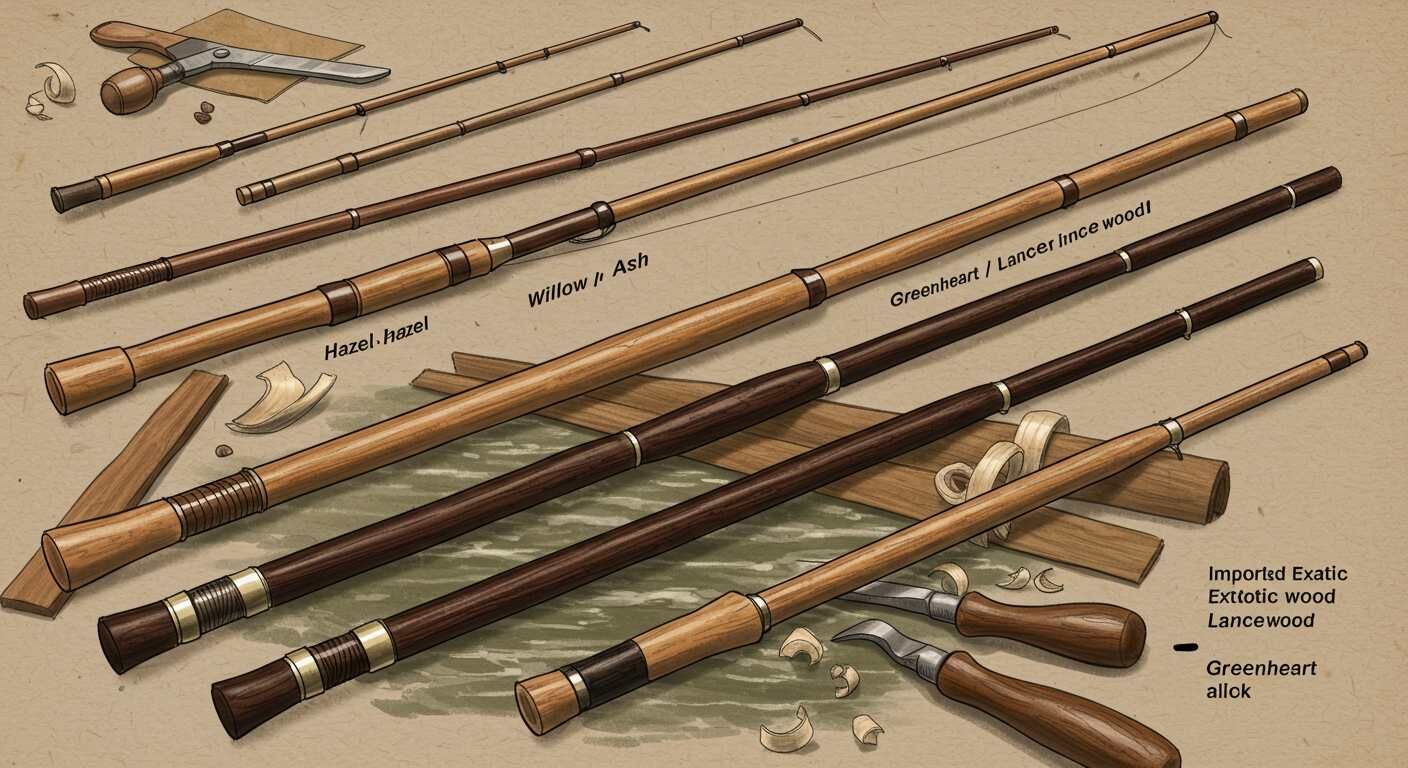
The original fishing rods used locally available woods like hazel, willow, and ash. Later, imported exotic woods such as greenheart and lancewood became prized for their superior properties.
- Pros: Natural feel, beautiful appearance
- Cons: Heavy, prone to warping, limited action control
Split-Cane Bamboo (1845-1950s)
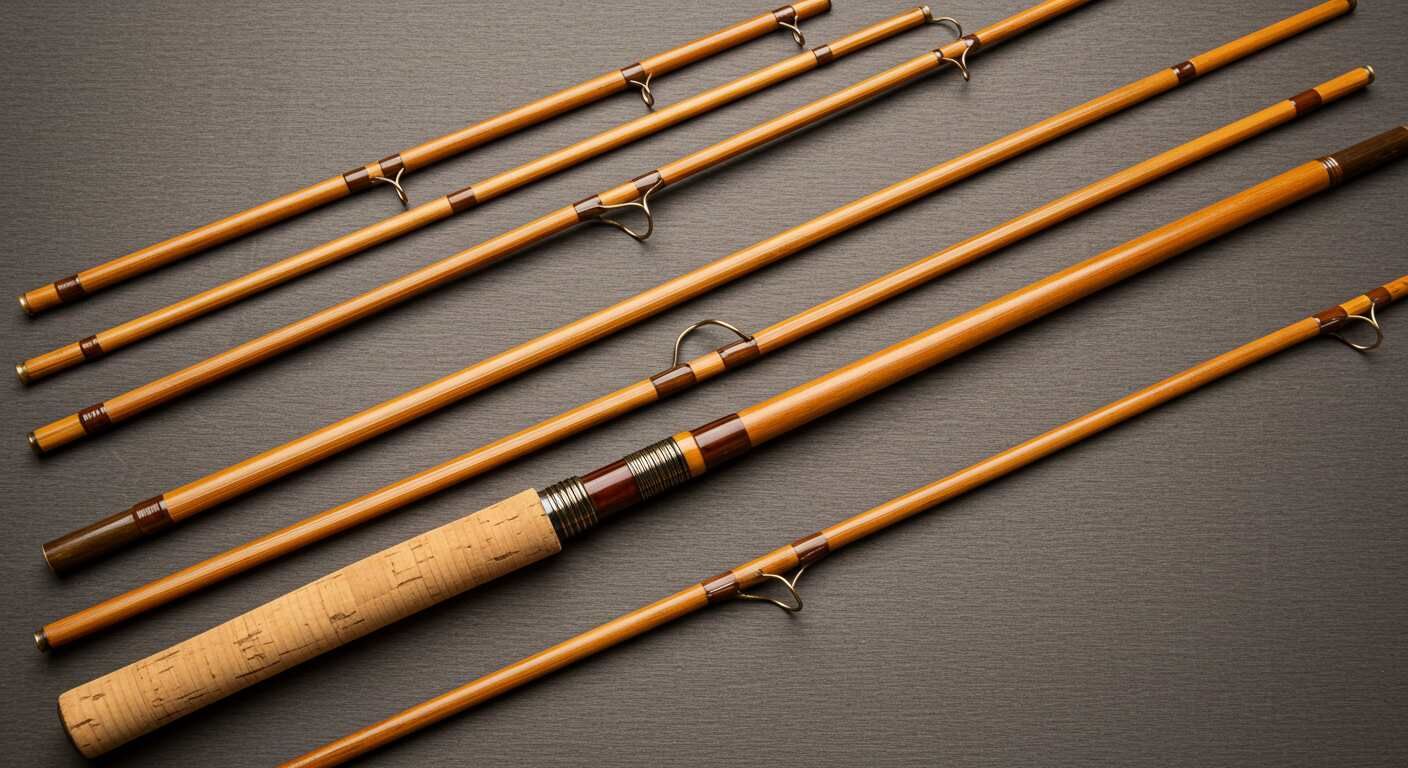
Pioneered by Samuel Philippe in 1845, split-cane bamboo rods dominated the premium market. Six triangular strips of bamboo were glued together in a hexagonal pattern, creating superior strength and action.
- Pros: Exceptional feel, progressive action, artisanal quality
- Cons: Labor-intensive, expensive, requires maintenance
Fiberglass (1940s-1970s)
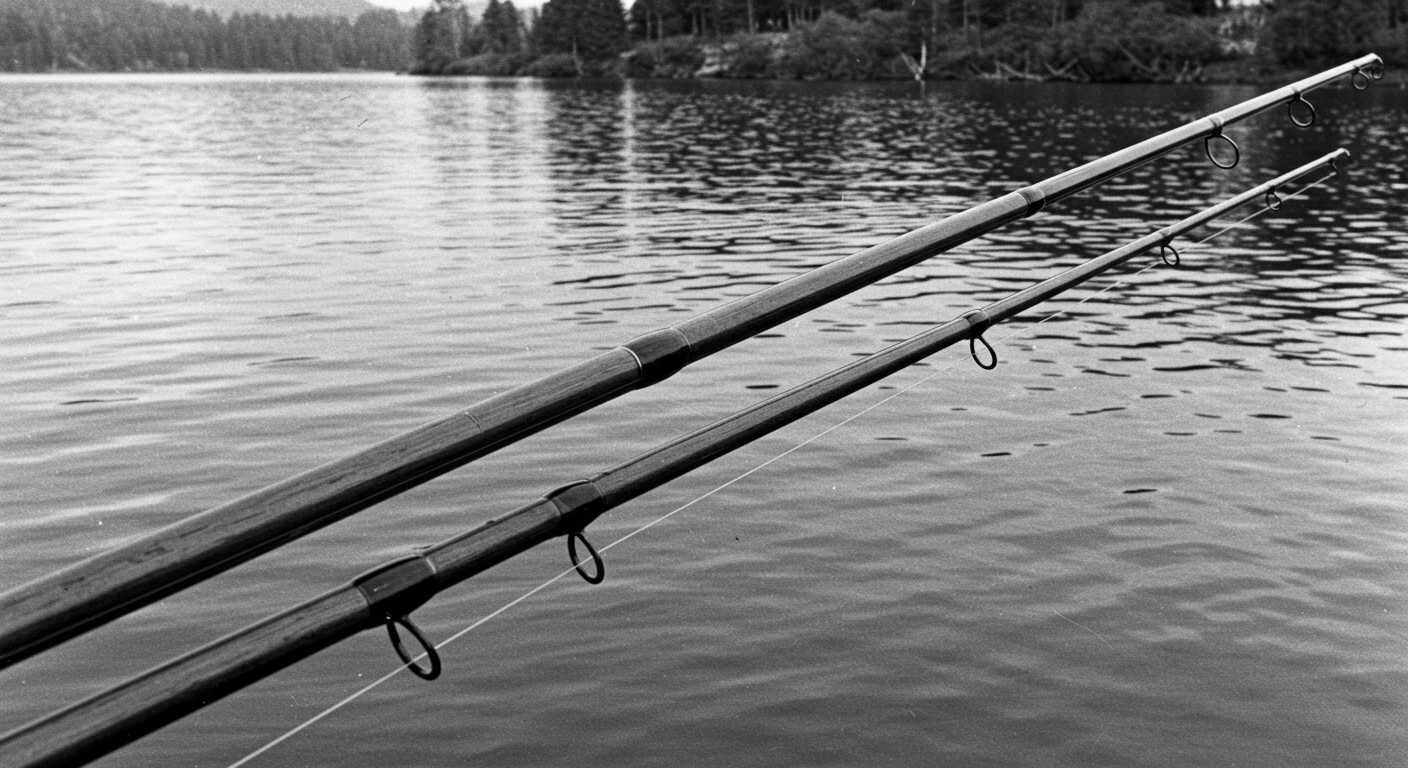
Developed by Robert Gayle and Mr. McGuire in the 1940s, fiberglass rods democratized fishing with their durability and affordability. The material’s flexibility created a smooth, parabolic action perfect for certain techniques.
- Pros: Nearly indestructible, consistent performance, affordable
- Cons: Heavier than modern materials, less sensitive
Graphite (1970s-2000s)
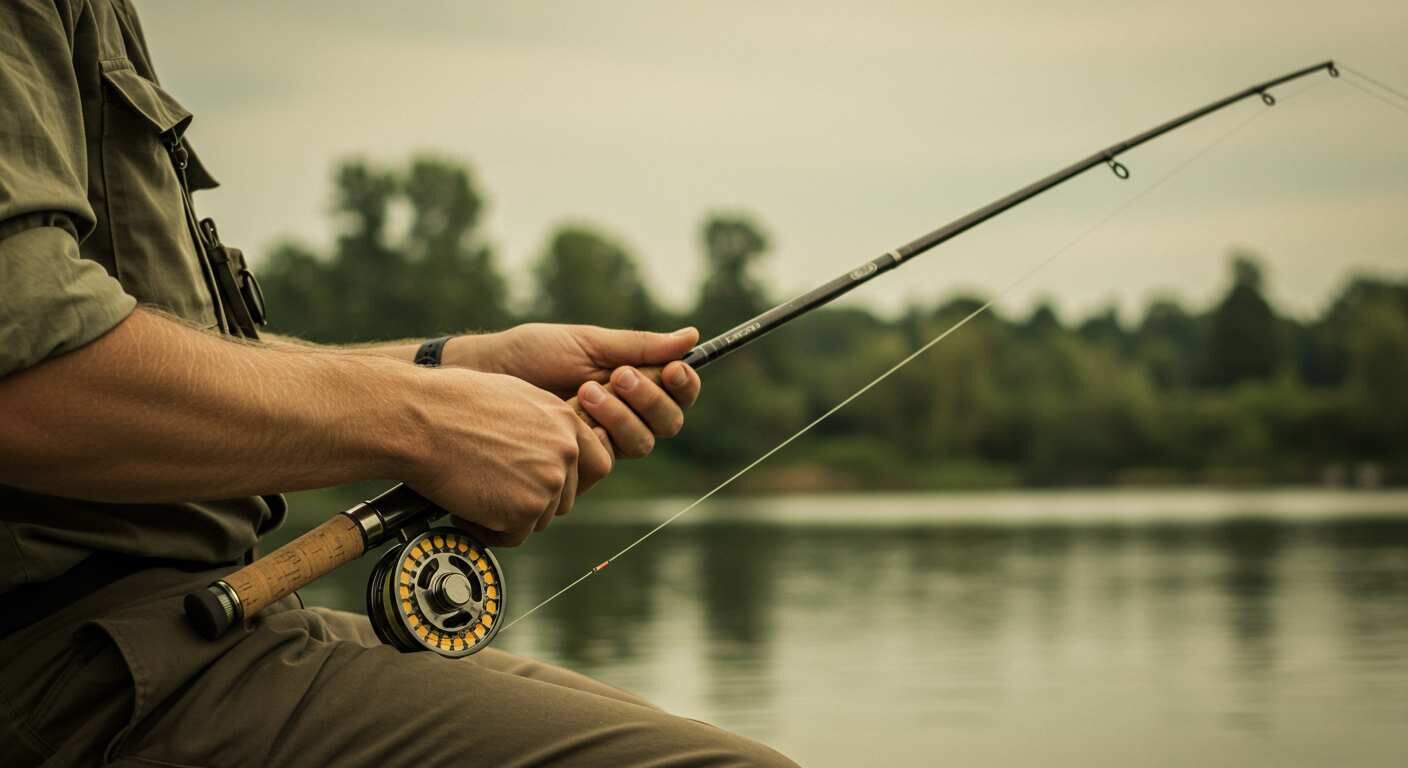
Pioneered by Hewitt and Dr. Howald, graphite rods revolutionized fishing with lightweight construction and incredible sensitivity. Dick Kantner’s designs helped create rods that changed how anglers approached techniques.
- Pros: Lightweight, highly sensitive, diverse action profiles
- Cons: More brittle than fiberglass, initially expensive
Modern Composites (2000s-Present)
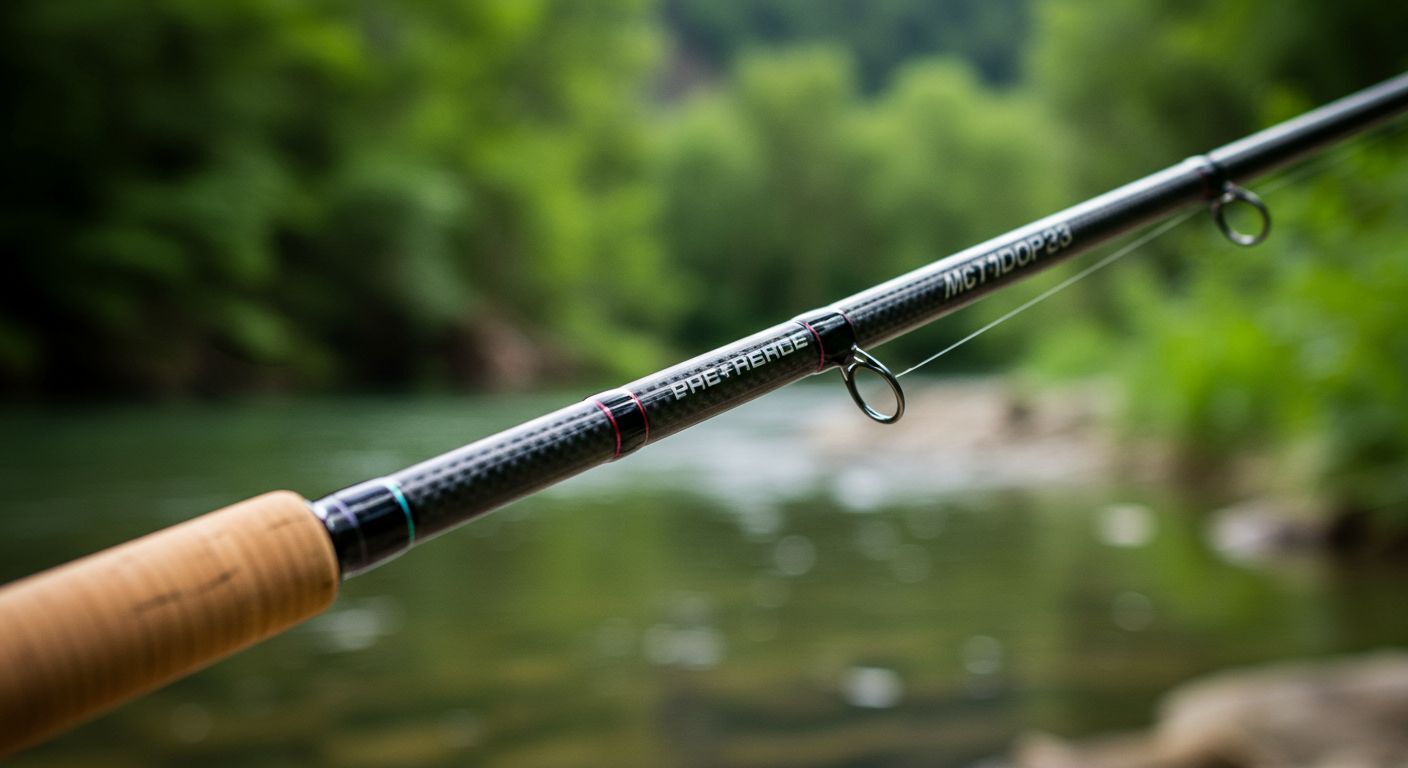
Today’s high-performance rods blend carbon fiber with materials like boron and nano-resins to create rods with precisely engineered actions and incredible strength-to-weight ratios.
- Pros: Ultra-lightweight, precision-engineered actions, maximum sensitivity
- Cons: Premium models can be expensive, highly specialized
The Specialization Era: Different Rods for Different Jobs
Perhaps the most significant development in recent decades isn’t just what rods are made of, but how specialized they’ve become. Early anglers used the same rod for everything—if it could hold a line, it was good enough.

Today, we have specialized tools for every fishing scenario imaginable. There are ultralight rods for panfish, heavy offshore rods for marlin, specialized ice fishing rods, telescopic travel rods, and everything in between.
One of the most significant differentiation points is between casting rods and spinning rods. While spinning rods have the reel hanging beneath the rod, casting rods position the reel on top, with guides facing upward. This fundamental design difference affects everything from casting technique to the types of fishing each excels at. For a deeper dive into these differences, check out my comprehensive guide on what is a casting rod and how it differs from other types.
My own gear collection reflects this specialization—I’ve got different rods for bass fishing, trout streams, saltwater use, and even one specifically for fishing under docks. My wife rolls her eyes every time I bring home “just one more rod,” but as I explain to her (repeatedly), they’re all absolutely essential. She remains unconvinced.
Cultural Significance: More Than Just Tools
Fishing rods aren’t just utilitarian tools—they’ve become deeply embedded in cultural traditions around the world. In many countries, the passing down of a fishing rod from father to son (or increasingly, daughter) is a meaningful rite of passage.
In Japan, the art of bamboo rod making has been elevated to an almost spiritual practice. Master craftsmen like Masaki Takano create works of functional art that sell for thousands of dollars and have waiting lists years long.
Similarly, in the United States, there’s been a resurgence of interest in traditional bamboo rod crafting, with artisans like Tom Morgan and Per Brandin keeping historical techniques alive while incorporating modern understanding of physics and materials.
The fishing rod has transcended its humble origins as a food-gathering tool to become a symbol of patience, skill, tradition, and our connection to the natural world. Not bad for what started as a stick with string tied to it, right?
The Future: Where Do We Go From Here?
What does the future hold for fishing rod development? If history has taught us anything, it’s that innovation never stops. We’re seeing intriguing developments in several areas:
- Smart rods with integrated electronics to track your casting and fish fighting technique
- Advanced composite materials that continue to reduce weight while increasing strength
- Sustainable manufacturing practices and eco-friendly materials
- Custom 3D-printed components tailored to an individual angler’s measurements and preferences
While technology marches forward, there’s also renewed appreciation for traditional craftsmanship. Many anglers are returning to bamboo and fiberglass rods, appreciating their slower, more deliberate action and connection to fishing’s rich heritage.
Will we ever create the “perfect” fishing rod? Probably not—and that’s the beauty of it. As long as fish keep swimming and humans keep trying to catch them, we’ll continue refining our tools, techniques, and technologies. It’s a never-ending quest that connects us not just to the fish, but to generations of anglers who came before us.
Next time you pick up your fishing rod, take a moment to appreciate the thousands of years of innovation you’re holding in your hands. From ancient sticks to space-age carbon fiber, the fishing rod remains one of humanity’s most enduring and evolving tools. And if that doesn’t give you a newfound appreciation for your gear, at least you’ve got a great excuse next time someone questions why you need “another” fishing rod—it’s not just a purchase, it’s participating in history!
FAQ: The Evolution and History of the Fishing Rod
What were the first fishing rods made of?
The earliest fishing rods were simple sticks made from locally available woods and plants. Ancient civilizations in Egypt, Greece, Rome, and China used materials like reeds, bamboo, and hardwoods such as juniper and cornel wood. These basic rods were typically around six feet long, with lines made from horsehair or finely woven flax, and hooks crafted from bone, shell, or bronze. These simple tools reflected early anglers’ resourceful use of available materials for the essential task of catching fish for food.
When did bamboo become popular for fishing rod construction?
Bamboo began its rise to prominence in fishing rod construction during the 17th and 18th centuries, but it truly revolutionized the industry in the 19th century with the development of split-cane rods. Samuel Philippe is credited with creating the first split-cane rod in 1845, where bamboo was split into strips, planed, and glued together in a hexagonal pattern. This technique produced rods with superior strength, flexibility, and action compared to solid wood. The late 19th century through the mid-20th century is often considered the golden age of bamboo rod craftsmanship, with master craftsmen like Hiram Leonard (often called the father of bamboo rod making), Charles Orvis, and William Hardy leading the way.
How did the introduction of synthetic materials change fishing rods?
The introduction of synthetic materials in the 20th century completely transformed fishing rod manufacturing and accessibility. Fiberglass appeared in the 1940s, pioneered by Robert Gayle and Mr. McGuire, offering greater durability, reduced maintenance, and significantly lower costs compared to handcrafted bamboo. This democratized fishing by making quality rods affordable for average anglers. The 1970s brought graphite rods, which were lighter and more sensitive than fiberglass, revolutionizing technique and performance. These synthetic materials enabled mass production, specialized designs for different fishing styles, and continuous innovation. Today’s high-performance rods using carbon fiber, nano-resins, and composite materials are direct descendants of this synthetic revolution, offering performance characteristics that would have been impossible with natural materials.
Who were some of the most influential figures in fishing rod development?
Several innovators dramatically shaped fishing rod evolution. Samuel Philippe developed the first split-cane bamboo rod in 1845, revolutionizing rod construction. Hiram Leonard, often called the father of bamboo rod making, perfected splitting techniques and taper designs that set standards still respected today. Charles Orvis and William Hardy became influential rod producers who helped commercialize quality fishing equipment. In the synthetic era, Robert Gayle and Mr. McGuire developed the first fiberglass rods in the 1940s, while Hewitt and Dr. Howald pioneered graphite rod construction in the 1960s and 70s. Albert Illingworth’s 1905 invention of the modern spinning reel transformed fishing by allowing for better line management. Dick Kantner’s work on graphite rod design helped create the highly sensitive, lightweight rods that transformed angling techniques and possibilities.
How have fishing rod lengths and designs evolved for different fishing techniques?
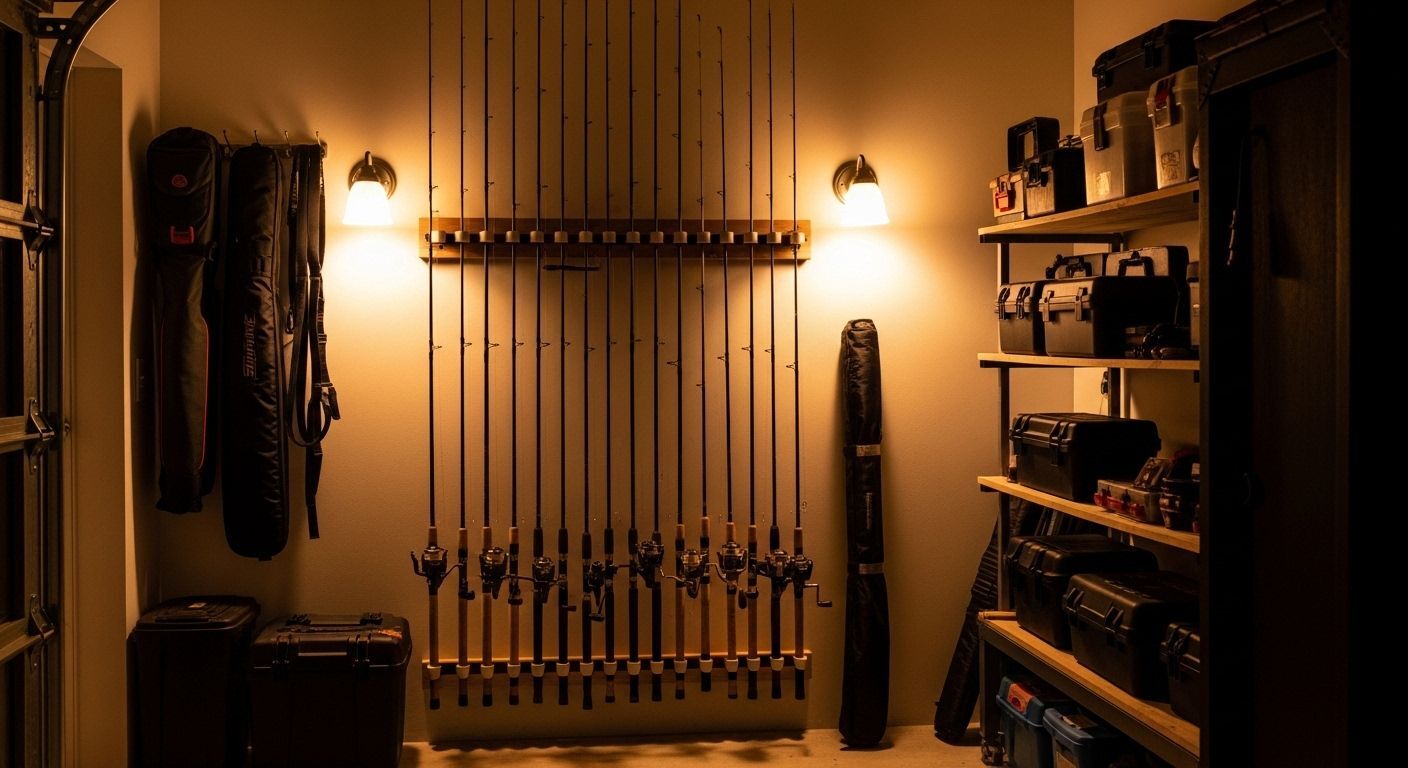
Fishing rod designs have evolved dramatically to match specific techniques and environments. Early rods were often extremely long (sometimes 14-19 feet) to reach fish from shorelines. Medieval and Renaissance period rods featured two-piece designs with different flexibilities in each section. As specialized fishing techniques developed, rod designs diversified accordingly. Today, ultralight rods (5-6 feet) with fast action are perfect for small streams and panfish, while heavy offshore rods (7-12 feet) with slower actions are designed for big game saltwater species. The introduction of specialized casting rods with top-mounted reels allowed for greater accuracy with heavier lures, while spinning rods with bottom-mounted reels excel with lighter presentations. Modern rod lengths, actions, powers, and materials are specifically engineered for particular techniques, from fly fishing to deep sea trolling, reflecting both technological advancement and the increased specialization in angling styles.